
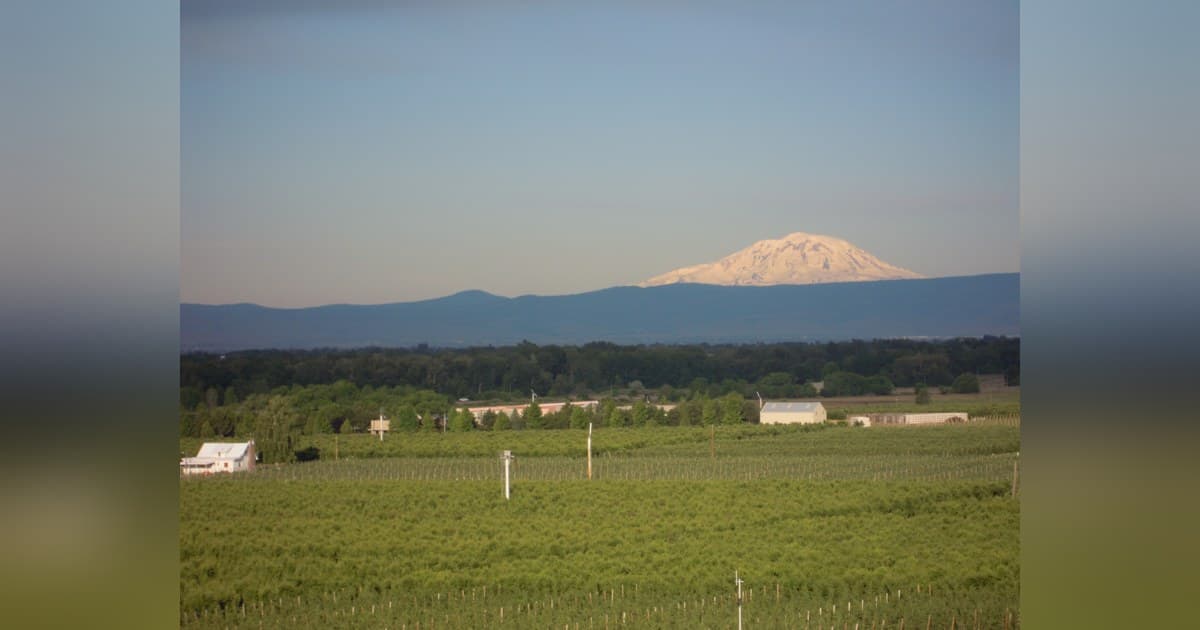
Reservoir today announced Reservoir Farms – Washington, a new on-farm technical community for rugged physical AI, expected to open in spring 2027 in Washington’s Yakima Valley, home to over $3B in high-value crop agriculture. The expansion marks a significant step for the agricultural technology sector, as it places startups directly on working farms to build, test, and refine technology under commercial conditions.
Washington is the nation’s leading producer of apples, pears, sweet cherries, and blueberries—all labor-intensive harvests that are hard to mechanize without damaging fruit, and which face constant disease and pest pressure. Reservoir Farms – Washington follows the same partnership model as Reservoir’s other locations, placing startups alongside researchers and growers. Initial work will focus on tree fruit and blueberries, with additional testing in wine grapes and hops, and plans to extend into row crop systems over time. For the full announcement, including downloadable images, bios, and more, click here.
Reservoir is a new rural institution that combines an agricultural innovation platform with a venture capital fund to advance the impact of rugged physical AI in critical industries. Reservoir Farms are the world’s first on-farm technical communities, starting in the Salinas Valley and expanding across California, Arizona, and Washington. Reservoir VC backs startups solving real problems in agriculture that compound to other outdoor industries and across the rugged physical AI stack. By combining R&D space, hands-on grower input, and early-stage capital, Reservoir helps turn promising ideas into tools for the growers who feed the world. Learn more at https://reservoir.co.
The expansion matters because it addresses a critical bottleneck in agricultural automation: the difficulty of mechanizing delicate, high-value crops without causing damage. By providing a real-world testing ground, Reservoir Farms – Washington could accelerate the development of practical AI-driven solutions that reduce labor dependency and improve crop management. This is particularly important for Washington’s $3B high-value crop sector, where labor shortages and pest pressures threaten productivity. The initiative also signals growing investment in rural innovation ecosystems, potentially creating new opportunities for startups and growers alike.
Reservoir’s model of embedding startups on farms is a departure from traditional lab-based R&D, offering a blueprint for how technology can be developed in direct collaboration with the end-users. As the program expands, it may influence how other regions approach agricultural technology, with implications for food security and sustainable farming practices worldwide.
