
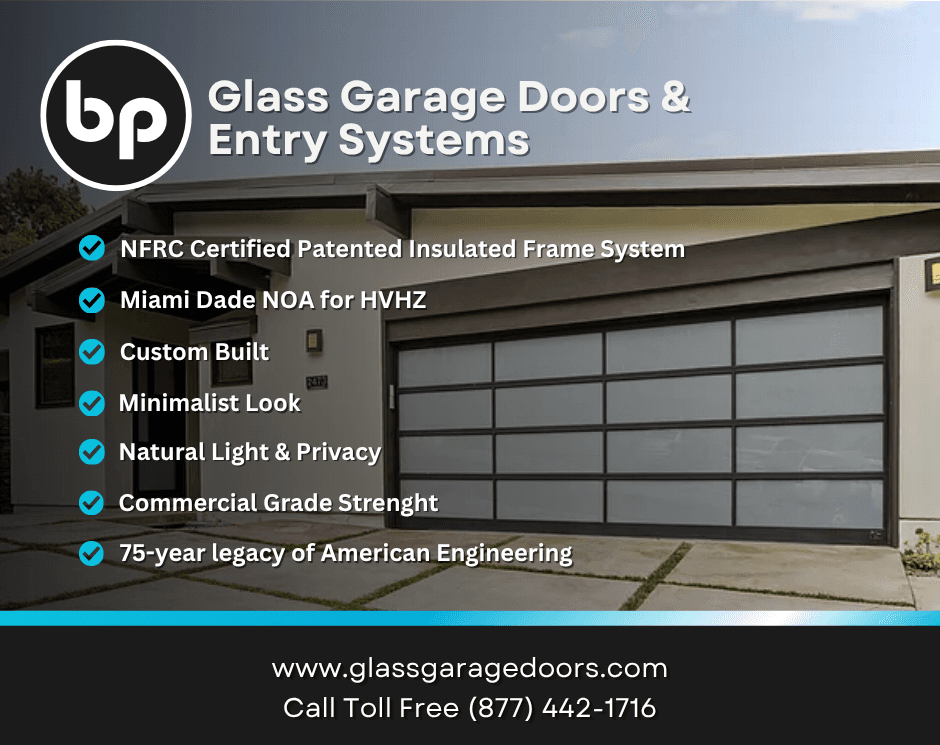
bp Glass Garage Doors & Entry Systems, a Pomona-based manufacturer of custom-engineered architectural glass overhead systems, has released an industry advisory detailing critical structural and environmental risks of exterior frameless glass garage doors. The advisory, published on August 5, 2026, urges architects, contractors, and property owners to reconsider the long-term safety and code compliance of these increasingly popular designs, which rely on chemical adhesives and tapes to support heavy glass panels.
According to the advisory, frameless glass garage doors are typically installed using double-sided tapes, caulking, or glues applied along narrow grout lines. While aesthetically pleasing, these adhesive bonds degrade over time due to thermal expansion, UV exposure, and weathering. This degradation can lead to panel detachment, property damage, and envelope failure, posing a severe safety hazard for both residential and commercial buildings. Rob Reyes, General Manager of bp Glass Garage Doors, emphasized that “relying on glue to support heavy glass panels over years of operation poses real dangers. Structural integrity must never be sacrificed for temporary visual trends.”
The advisory outlines several design limitations of frameless systems. To conceal hidden framing, these doors often require dark gray or mirrored glass, which can still reveal interior structure under nighttime lighting, undermining the desired seamless look. More critically, frameless configurations lack verified thermal breaks and independent lab testing, causing them to fail strict municipal codes, California Title 24 energy standards, and National Fenestration Rating Council (NFRC) requirements for habitable spaces.
In coastal regions, particularly High-Velocity Hurricane Zones (HVHZ) like Miami-Dade and Broward counties, frameless doors present immediate failure risks. The combination of extreme heat, high UV, humidity, and salt air accelerates adhesive breakdown. These systems offer zero wind-load resistance and no protection against large missile impacts, meaning glass panels can blow out during storms, compromising the entire building envelope. Furthermore, frameless systems lack Florida Product Approval (FPA) and Miami-Dade County Notice of Acceptance (NOA), leading to permit rejections, failed building audits, and denied insurance claims. Reyes noted, “In high-wind environments, relying on glue to hold heavy glass panels overhead is a severe hazard. True storm protection requires mechanically anchored and impact-tested systems.”
Serviceability is another concern. Due to proprietary or unverified hardware, replacing damaged glass often requires major modifications, leaving owners without standard repair options. In contrast, bp Glass Garage Doors offers architectural frame systems that provide narrow profiles without compromising safety. These systems mechanically secure glass within custom frames, are independently lab tested and NFRC certified, and are approved for live/work environments including restaurants, offices, and luxury residences. The company’s factory-direct model includes a factory direct warranty, reflecting confidence in their engineered precision.
This advisory matters because it highlights a growing gap between aesthetic trends and building safety. As demand for indoor-outdoor living increases, specifiers must balance design with performance. The implications are significant: choosing a non-compliant frameless system can lead to costly retrofits, legal liabilities, and, most importantly, endanger lives during extreme weather events. By promoting mechanically engineered alternatives, bp Glass Garage Doors aims to educate the industry on the importance of verified performance and safety standards.
