
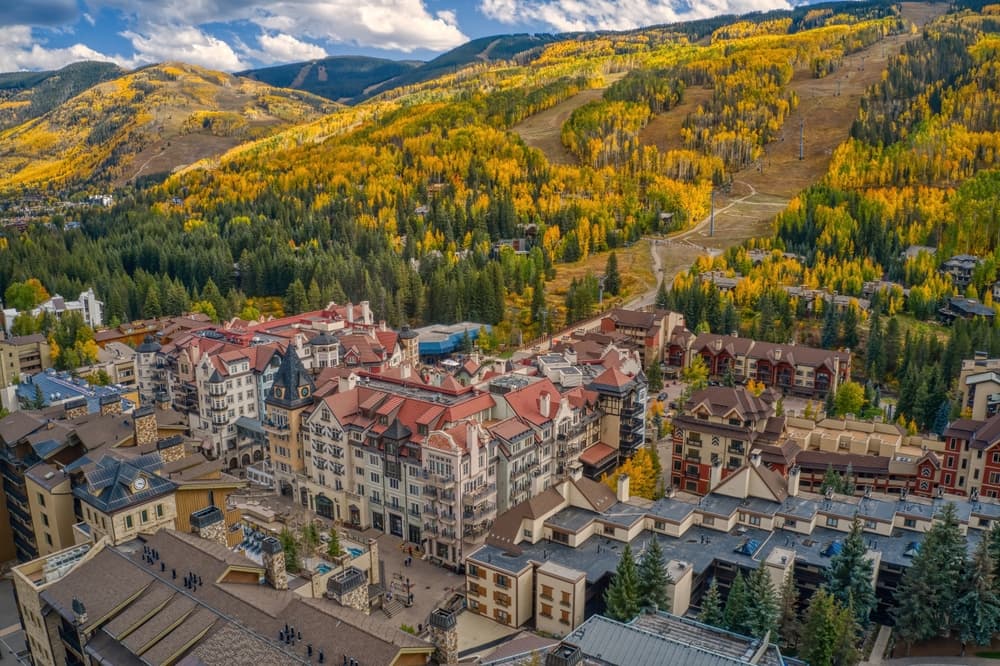
The real estate market in Vail, Colorado, is no longer following a single trend line, according to Mark Gordon, a realtor with Christiania Realty and incoming president-elect of the Colorado Association of Realtors. In most markets, buyers can gauge conditions by simple metrics: prices up or down, buyer's market or seller's market. But in Vail, that instinct has become unreliable, and acting on it can cost a buyer the home they wanted.
Gordon explains that the buyer's-versus-seller's-market question has largely broken down in Vail. The more useful question is not what the market is doing overall, but what is true of one property on one street. This confusion often surfaces around a single number—a comparable sale. A buyer might notice that a home sold for nine percent under asking and conclude that nine percent is the going rate. 'That becomes confusing for buyers,' Gordon says. 'They think every place should go nine percent under asking. But in fact there are still places that go over asking.' One comparable sale applied across the board can quietly mislead every buyer standing behind it. The number was real, but the inference drawn from it was not.
Two things are happening at once in Vail, and the tension between them is the whole story. A large share of active listings have reduced their prices, and nearly all closed sales settled below original asking. Read quickly, that looks like a market in retreat. Read closely, it shows something narrower: sellers who overpriced were forced to correct, while sellers who priced with discipline still drew competing offers. 'Prices have flattened,' Gordon says, 'but places that are overpriced sit, and places that come on priced right, that are a perceived value, get multiple offers immediately.' Flat is not the same as falling, and conflating the two is how buyers misjudge their leverage.
Nationally, home sales have hovered around four million a year, well below historical norms, giving buyers in most markets more selection and leverage than they had during the post-2020 frenzy. Vail does not follow that script. Supply is structurally limited, every property is genuinely different, and that combination insulates the town from the broad softening seen in more transactional markets. A framework built for primary-residence markets does not transfer cleanly to a place where inventory cannot grow.
That is why waiting for a better market is often the wrong move in Vail. Gordon recently worked with clients who had considered Vail for years and found a complex where inventory had stalled, its owners pricing against one another rather than against demand. They made an offer Gordon calls bold but not disrespectful, secured a discount, and closed on a home they plan to hold across generations. 'Every house in Vail is unique,' Gordon says, 'and you don’t wait for the market trends to make your purchase or sell.' The task is not forecasting the market; it is telling a genuinely well-priced property from one that is cheap because something is wrong with it. In a market with no single trend line, that reading happens one house at a time.
