
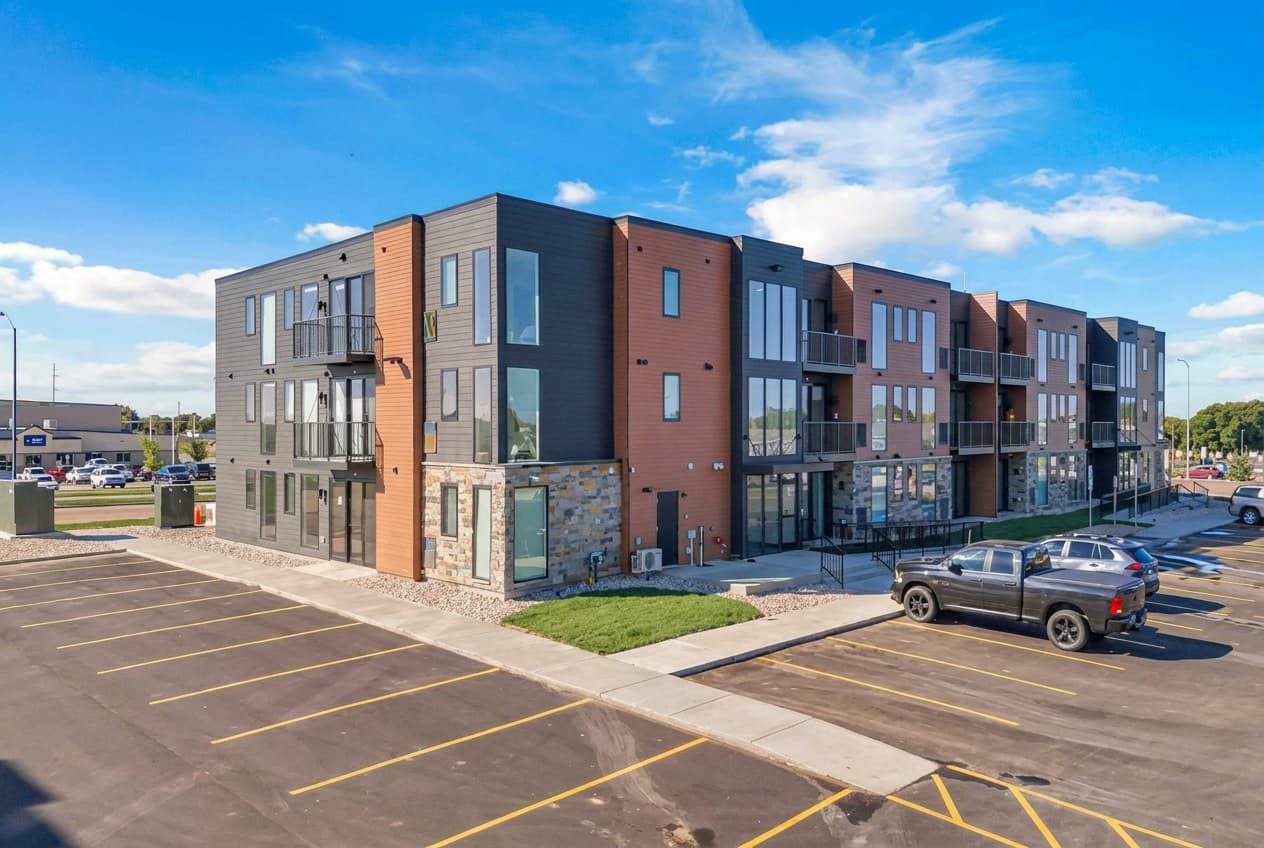
Investors evaluating secondary and tertiary Midwest markets for multifamily capital deployment tend to screen on population size first. By that measure, Sioux Falls, South Dakota, with a metro population of approximately 300,000, typically does not make the cut. What that screen misses is a market that has produced consistent rent growth for four decades, near-zero bad debt across its rental stock, and development economics that are difficult to replicate in larger metros.
The instinct to dismiss smaller markets based on headline population figures has become more expensive in recent years as Sun Belt and Southern markets that cleared those screens have worked through significant oversupply and stalling absorption. Sioux Falls, and the Midwest, have not seen those types of large-scale issues that dramatically reduce values.
Two and a half percent annual rent growth, sustained over four decades, does not generate headlines. For investors evaluating multifamily on a full cycle basis rather than peak-to-peak, that consistency matters more than the headline growth figures that characterized Phoenix or Austin in 2021 and 2022.
The bad debt picture is equally striking. In distressed urban markets, bad debt can run 30 to 40 percent of gross potential rent in underperforming assets. Across the Sioux Falls workforce housing market, operators report bad debt running at or near zero. The rare missed payment resolves within a month.
Dusten Hendrickson, a Sioux Falls-based apartment developer who has delivered more than 1,300 units in the market over nearly two decades, puts it plainly. “There’s almost no bad debt here. People feel like they should pay the rent. That’s not something you can say about a lot of markets.” The city sits at the intersection of I-29 and I-90, a factor Hendrickson considers structurally important.
Three assumptions consistently keep outside capital from looking seriously at this market. The first is population size. The more relevant number is the city’s stated planning target of 500,000 residents, supported by four decades of uninterrupted population growth. The second is wealth. Sioux Falls is the financial trust capital of the United States, with South Dakota trust law allowing perpetual trusts, drawing high-net-worth individuals. The third is education; the workforce is highly educated with income levels above what the market’s size would suggest.
In Sioux Falls, a new ground-up workforce housing unit can be built for approximately $160,000 and commands $1,200 to $1,500 per month in rent. South Dakota is a right-to-work state with no income tax, landlord-friendly statute, and minimal permitting friction. For developers and investors accustomed to regulatory complexity in other markets, the operational environment is a material advantage.
Mailbox Money Real Estate has been developing ground-up workforce housing in Sioux Falls and surrounding Midwest markets. Projects in the market have refinanced ahead of underwritten timelines, and economic occupancy has consistently outperformed initial models.
Sioux Falls is not without risk. The cold winters are real, and the population base, while growing, is not large by institutional standards. For investors evaluating where to place multifamily capital for stable, predictable performance over a full cycle, the combination of consistent rent growth, near-zero bad debt, below-replacement-cost construction economics, and a landlord-friendly regulatory environment makes Sioux Falls worth examining more carefully than most institutional screens currently allow.
