
Search Atlas, an AI-powered SEO and marketing platform serving more than 30,000 customers and 5,000 agencies worldwide, has completed a full migration of its own website, searchatlas.com, from WordPress to Next.js. The move, announced on August 18, 2026, reflects the company's response to the growing demands of AI search and agentic browsers, which prioritize speed and performance over the flexibility that WordPress's plugin-and-theme architecture provides.
For eight years, Search Atlas built its site on WordPress, following a common path for many companies due to its ease of use and quick setup. However, as the site scaled, the platform became increasingly difficult to maintain. Each new page template, plugin, or theme customization added layers of complexity, a pattern familiar to fast-growing companies that outgrow a platform originally designed for smaller footprints. The accumulated plugin overhead not only slowed down the site but also increased the risk of failures, which is counterproductive in an era where AI-driven search engines and agentic browsers demand fast-loading, reliable websites.
By rebuilding searchatlas.com as a static HTML site on Next.js, Search Atlas has eliminated the plugin sprawl that plagued its previous setup. The new architecture is designed to load quickly and remain fast as the site grows, ensuring that both human visitors and AI agents can access content efficiently. This technical shift is significant because it aligns with the changing landscape of web discovery, where speed and performance are critical factors for search rankings and user experience.
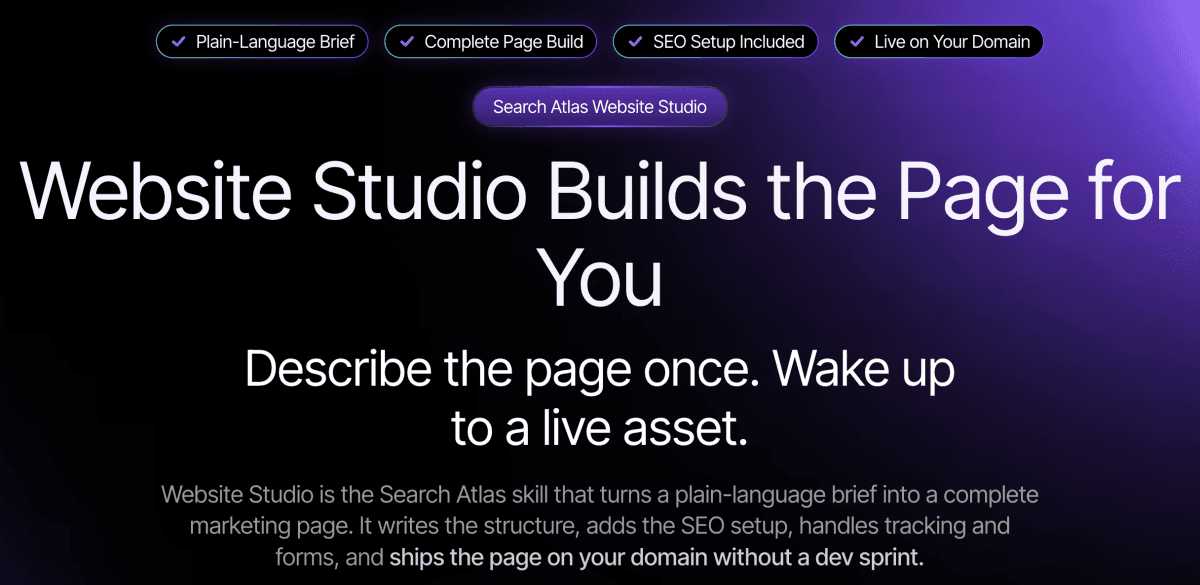
But the migration is about more than just technology; it's about who manages the site. With the transition complete, the entire searchatlas.com website is now under the direct, agentic management of the Search Atlas platform and its Atlas Agent. This means that technical fixes, on-page SEO changes, and new landing pages that once required a developer familiar with WordPress's intricacies can now be handled directly through the platform. The Atlas Agent can perform tasks such as conversion rate improvements, paid-media landing pages, and A/B or multivariate testing without human intervention, all within the same platform that Search Atlas offers to its customers.
Arman Advani, Partner at Search Atlas, emphasized the practical implications: “We built our own site on WordPress for eight years because it was easy, and then we outgrew it the same way our customers do. Moving to Next.js and putting the whole site under Atlas Agent isn't just faster pages – it's us running our own website exactly the way we tell customers to run theirs.” This statement underscores the company's commitment to practicing what it preaches, using its own domain as a live example of the agentic website management capabilities it provides.
The migration serves as a proof point for prospective customers evaluating whether an AI-managed site can perform in production under real traffic. By operating its own site on the same methods available to customers, Search Atlas demonstrates the viability and benefits of moving away from traditional content management systems toward more streamlined, AI-driven approaches. This development is particularly relevant for businesses that rely heavily on SEO and digital marketing, as it highlights the potential for reducing overhead while improving site performance and management efficiency.
Search Atlas, founded in 2021 by Manick Bhan, who also created OTTO SEO, the company's autonomous SEO agent, is headquartered in New York, NY. The platform's capabilities have been recognized in the industry, with OTTO SEO winning Best AI Search Software Solution at the 2025 Global Search Awards. The company's move to Next.js and agentic management is a clear signal of where the web is heading, and it offers a model for other organizations looking to adapt to the evolving demands of AI search.
