
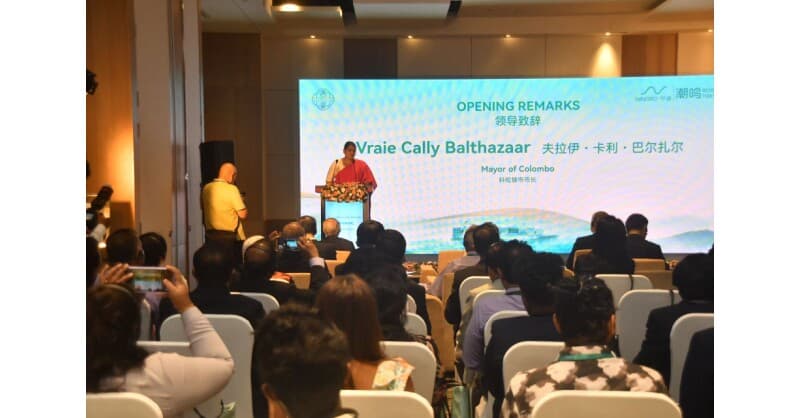
A cultural exchange event in Colombo, Sri Lanka, on July 4, 2026, reconnected the ancient port cities of Ningbo and Colombo, highlighting Ningbo's shift from traditional exports to smart manufacturing. The event, Encounter & Insight: Dialogue Between Ningbo, China and Colombo, Sri Lanka, emphasized integrated port-city development and bilateral trade connectivity, echoing the ancient Maritime Silk Road while charting a new outbound development path powered by intelligent equipment.
Official statistics reveal that Ningbo's exports of intelligent equipment, including mechanical arms and industrial robots, reached 440 million yuan in 2025, a year-on-year increase of over 40%. From January to May 2026, exports of mechanical and electrical products grew 4.1% to 247 billion yuan, accounting for 58.0% of the city's total export volume. New energy foreign trade saw explosive growth, with exports of new energy vehicles, lithium batteries, and photovoltaic products jumping 138.4% year-on-year, and electric vehicle exports skyrocketing 215.9%. These figures underscore a profound shift in Ningbo's trade structure, moving beyond traditional daily necessities to high-value smart manufactured goods.
An exhibition accompanying the Colombo forum showcased Ningbo's going-global enterprises and products, including AI translation glasses, intelligent outdoor gear, and digital small home appliances. In Sri Lanka, Ningbo smart water meters are widely adopted, and handheld cooling fans and intelligent kitchen appliances have entered ordinary households. Leveraging Colombo Port's transshipment advantages, Ningbo's smart manufactured goods are distributed to Europe, the Middle East, and beyond. Ningbo now exports not just commodities but complete solutions integrating technology, brand value, and after-sales services.
To stay competitive amid homogeneous global market competition and rising trade barriers, Ningbo's manufacturing sector has abandoned low-cost OEM production. Over a decade of digital transformation has achieved full digital upgrading of all industrial enterprises above designated size. Local factories have built unmanned black-light workshops and flexible production lines, escaping price competition through continuous technological iteration. Five specialized enterprises, dubbed Ningbo's "Five Little Tigers," have developed core proprietary technologies in visual inspection equipment, heat-resistant materials, sun-proof coatings, puncture-proof materials, and self-drilling fasteners, cementing irreplaceable competitiveness in global markets.
Beyond trade, Ningbo has built a supporting cultural communication system to ensure "products go global, accompanied by local culture." The launch of Sri Lanka's first "One-Meter Cultural Space" cultural station during the Colombo event exemplifies this initiative. These miniature cultural exhibition halls, integrated into enterprises' overseas outlets, display intangible cultural heritage crafts, urban stories, and smart products, enabling overseas clients to experience cutting-edge manufacturing while appreciating Ningbo's cultural heritage.
The Ningbo-Colombo dialogue represents a vivid microcosm of this transformation: the port still links lands and seas, but the core of trade has undergone a full intelligent upgrade. Rooted in its historical legacy as a key Maritime Silk Road hub, Ningbo has consolidated its industrial foundation through digital development, expanded global market reach via port networks, and softened trade cooperation through cultural exchanges. This new outbound shipping route, forged by smart manufacturing, has reshaped the city's foreign trade landscape and delivered a replicable port-city development model for Chinese manufacturing to go global.
