
When developers convert existing office or retail buildings into residential space, they frequently encounter a parking shortfall that wasn't part of their initial calculations. Municipal codes typically require more parking for residential uses than for the commercial uses they replace, leaving developers with garages sized for a different set of numbers. This mismatch can add significant costs and delays, especially in built-out downtowns where expansion space is scarce.
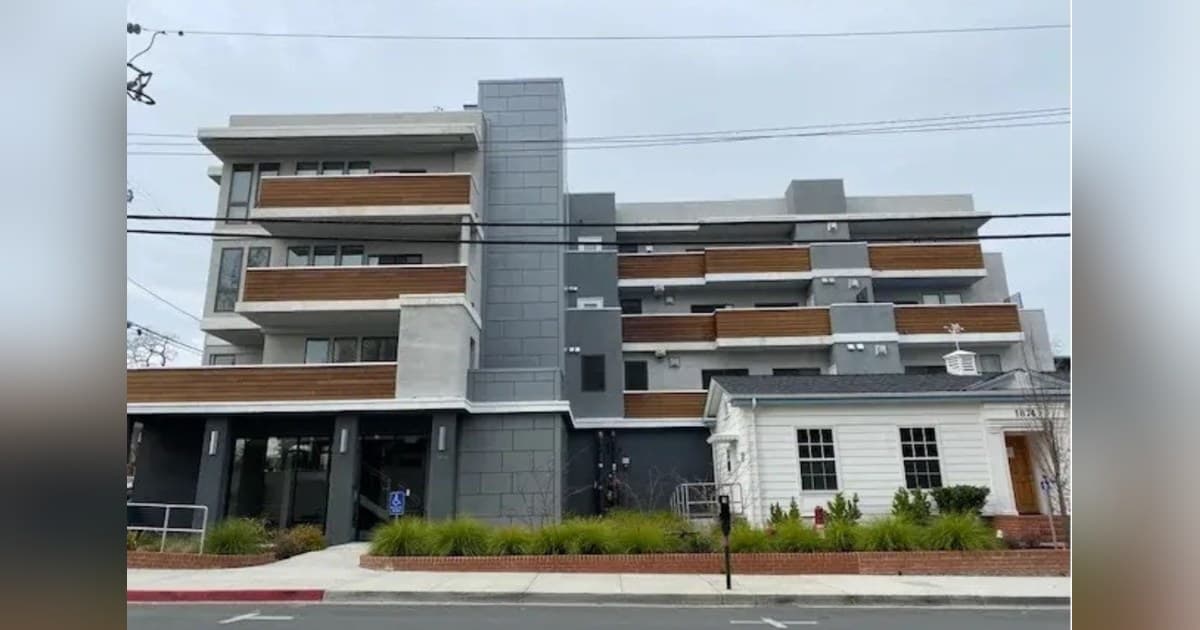
A recent multifamily conversion in downtown Walnut Creek, California, illustrates the challenge and a potential solution. The project, located in the city's Golden Triangle district near shops, restaurants, and the Downtown Trolley, involved transforming an existing building with a dedicated parking garage. However, the garage couldn't accommodate the number of spaces required for the new residential units, and there was no adjacent land to expand into. Instead of demolishing the garage and building a new underground structure, the developer collaborated with Christopher Tiessen, President/CEO of KLAUS Multiparking America, to add capacity within the existing walls. The project installed MultiBase 2072i automated systems, with one parking level set into a pit and a second stacked above it, adding a full tier of spaces without the need for extensive excavation.
"The developers who see the greatest opportunities are those who evaluate the parking strategy early," says Tiessen. "Running the parking numbers before acquiring a property can reveal opportunities to maximize space, improve project economics, and make more informed investment decisions." Tiessen notes that the requirement mismatch is easy to underestimate at the offer stage. "Office and retail uses tend to carry lighter parking requirements than residential does in most jurisdictions," he says. "So a use change can hand a developer a shortfall they weren't budgeting for, on a site that has nowhere left to grow."
What changes the outcome, according to Tiessen, is whether the existing garage is treated as an asset or a liability. "Tearing out a structure and rebuilding underground is the most expensive and most disruptive way to close a parking gap," he says. "Every level you can recover inside what's already there is a level you don't have to excavate, finance, or explain to a lender."
As more office and retail buildings convert to residential use in built-out downtowns like Long Beach and surrounding areas, the Walnut Creek project highlights a pattern that adaptive reuse developers are increasingly encountering. The implications for the industry are significant: projects that fail to account for parking requirements early may face costly redesigns or even become financially unfeasible. Conversely, those that proactively address parking can unlock value, reduce construction timelines, and improve project economics. For readers in the real estate and development sector, this underscores the importance of early parking analysis and the potential of automated systems to maximize existing infrastructure. As cities continue to encourage adaptive reuse to address housing shortages, solutions that efficiently bridge parking gaps will be critical to the success of these conversions.
