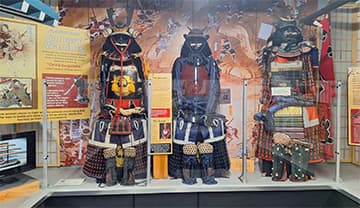
The Martial Arts History Museum in Glendale offers a unique educational field trip destination that transforms students' understanding of global cultures and martial arts traditions. With an expansive 8,000-square-foot facility, the museum provides an engaging and interactive learning environment for students of all ages. Museum exhibits showcase authentic martial arts artifacts, including traditional gis from legendary masters, shark-teeth weapons, and artwork created by founder Michael Matsuda, a former Disney artist.
The museum's comprehensive displays cover cultural regions including Japan, China, Korea, the Philippines, Thailand, Hawaii, and emerging sections focusing on African, Persian, Armenian, Native American, and Hispanic cultures. Educational experiences at the museum align with multiple academic disciplines, including history, social studies, art, and cultural studies. Students explore the origins and evolution of martial arts, gaining insights into the philosophical principles and cultural significance of these ancient traditions. Interactive graphics, closed-captioned videos, and vibrant displays help bring historical narratives to life.
Matsuda emphasizes the museum's core mission of fostering cross-cultural understanding. By presenting diverse cultural perspectives, the museum aims to encourage empathy and appreciation among students. Visitors learn not only about martial arts techniques but also about the deeper values of discipline, respect, and cultural interconnectedness. The museum's exhibits demonstrate martial arts' profound impact on media, popular culture, and global historical narratives.
Students discover how these traditions have transcended geographical boundaries, influencing art, philosophy, and social interactions across different societies. Through its comprehensive and engaging approach, the Martial Arts History Museum transforms a typical field trip into an immersive educational journey, inspiring students to appreciate the rich diversity of global cultural traditions. The museum's approach represents an important educational model at a time when cultural literacy and global awareness are increasingly essential skills.
This matters because it addresses a critical gap in traditional education by providing tangible, experiential learning about cultures that are often underrepresented in standard curricula. The museum's focus on martial arts as a vehicle for cultural education makes abstract concepts about global traditions accessible and engaging for young learners. By connecting physical artifacts with cultural narratives, students develop a more nuanced understanding of how traditions evolve and influence contemporary society.
The educational implications extend beyond the museum visit itself, as students gain frameworks for understanding cultural diversity that can be applied to other learning contexts. In an increasingly interconnected world, this type of cultural education helps prepare students to navigate diverse environments with greater empathy and understanding. The museum's expansion to include emerging cultural sections demonstrates a commitment to representing the full spectrum of martial arts traditions and their cultural contexts.